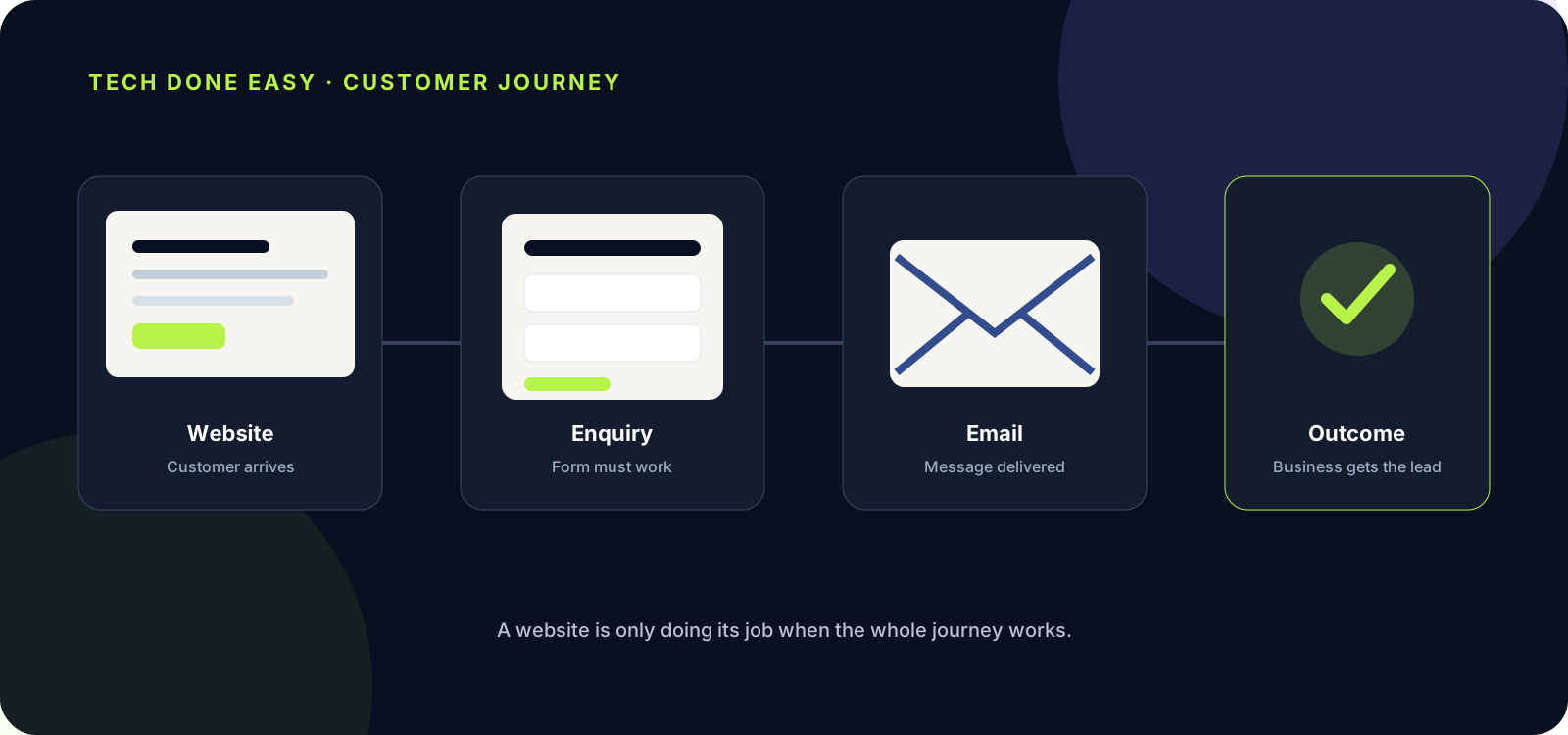
A website can be technically online and still create friction that costs enquiries. Here are the practical issues worth checking first.
A website does not need to be completely broken to become a business problem. It can load, look professional and still make it harder for the right person to contact you.
The difficult part is that these problems are often spread across different systems: the website itself, hosting, DNS, forms, email delivery, mobile layout, third-party tools and the people responsible for keeping everything connected.
The obvious problems are not always the expensive ones
A broken page is easy to spot. A contact form that quietly fails, an email notification that never arrives, or a mobile layout that makes a form difficult to use can be much harder to notice because the website appears to be working.
- Forms: Does an enquiry actually reach the business?
- Email: Are notifications delivered reliably?
- Mobile: Can someone complete the important action comfortably on a phone?
- Speed: Are large images, scripts or third-party tools slowing down the page?
- Links: Do important buttons still go where they should?
- Ownership: Does anyone know who is responsible when something changes?
A website problem is often an ownership problem disguised as a technical problem.
Check the journey, not just the homepage
Open the website as if you were a new customer. Start on a service page, read an article, click the main CTA and submit the enquiry. Then check what happens on the business side.
If the customer journey ends with a form submission but nobody receives the message, the website has not really completed its job.
What happens when several suppliers are involved?
This is where small problems become frustrating. A domain may be with one company, email with another, hosting with a third, and the website maintained by a freelancer. Each part may work individually while the overall system does not.
You should not have to become the technical coordinator just to keep your business running.
What to do next
Start with the business outcome: what should the website help a customer do? Then trace the technical path backwards. If the goal is an enquiry, check the page, CTA, form, spam protection, email delivery and notification process.
Tell Tech Done Easy what is happening in plain English. You do not need to know which technical service you need.